Contact
AI & Technology
AI & Technology
I shaped our AI search tool to deliver precise and reliable results, defining user intents, refining prompts to align with consultant needs, and designing error handling scenarios that makes the technology more trustworthy.
01
01
Boosting AI Output
Boosting AI Output
Early in development, I noticed that our AI search responses weren’t improving at the pace we expected. Initially, this was seen as a purely technical problem for developers to solve. However, I did my own investigation and I identified an opportunity to contribute from a design perspective by examining how prompts were structured. The issue was clear: the prompts didn’t reflect our target audience or the nuances of the data. By re-engineering them through a user experience lens, I was able to align outputs more closely with the needs and language of consultants. This collaboration between design and development resulted in a significant uplift in the accuracy and usefulness of search results, highlighting how designers can play a critical role in shaping AI behaviour.
Early in development, I noticed that our AI search responses weren’t improving at the pace we expected. Initially, this was seen as a purely technical problem for developers to solve. However, I did my own investigation and I identified an opportunity to contribute from a design perspective by examining how prompts were structured. The issue was clear: the prompts didn’t reflect our target audience or the nuances of the data. By re-engineering them through a user experience lens, I was able to align outputs more closely with the needs and language of consultants. This collaboration between design and development resulted in a significant uplift in the accuracy and usefulness of search results, highlighting how designers can play a critical role in shaping AI behaviour.
Early in development, I noticed that our AI search responses weren’t improving at the pace we expected. Initially, this was seen as a purely technical problem for developers to solve. However, I did my own investigation and I identified an opportunity to contribute from a design perspective by examining how prompts were structured. The issue was clear: the prompts didn’t reflect our target audience or the nuances of the data. By re-engineering them through a user experience lens, I was able to align outputs more closely with the needs and language of consultants. This collaboration between design and development resulted in a significant uplift in the accuracy and usefulness of search results, highlighting how designers can play a critical role in shaping AI behaviour.
Early in development, I noticed that our AI search responses weren’t improving at the pace we expected. Initially, this was seen as a purely technical problem for developers to solve. However, I did my own investigation and I identified an opportunity to contribute from a design perspective by examining how prompts were structured. The issue was clear: the prompts didn’t reflect our target audience or the nuances of the data. By re-engineering them through a user experience lens, I was able to align outputs more closely with the needs and language of consultants. This collaboration between design and development resulted in a significant uplift in the accuracy and usefulness of search results, highlighting how designers can play a critical role in shaping AI behaviour.
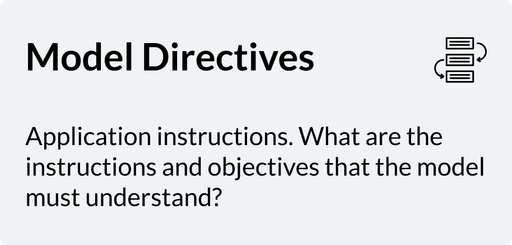
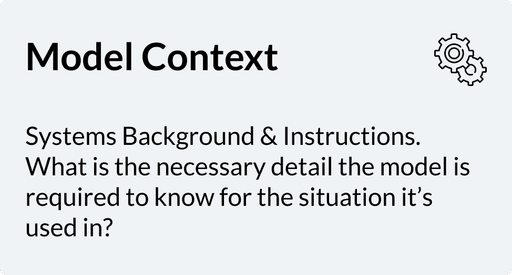
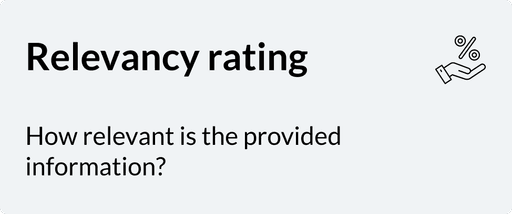
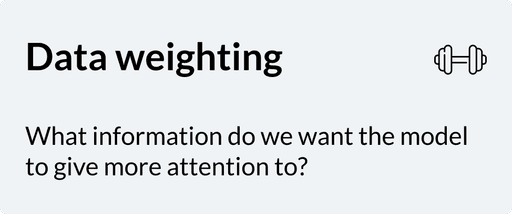
Model Directives
After collaborating with the data science team and developers, I defined the key directives that need to be engineered with the user in mind.
02
02
Intent
Intent
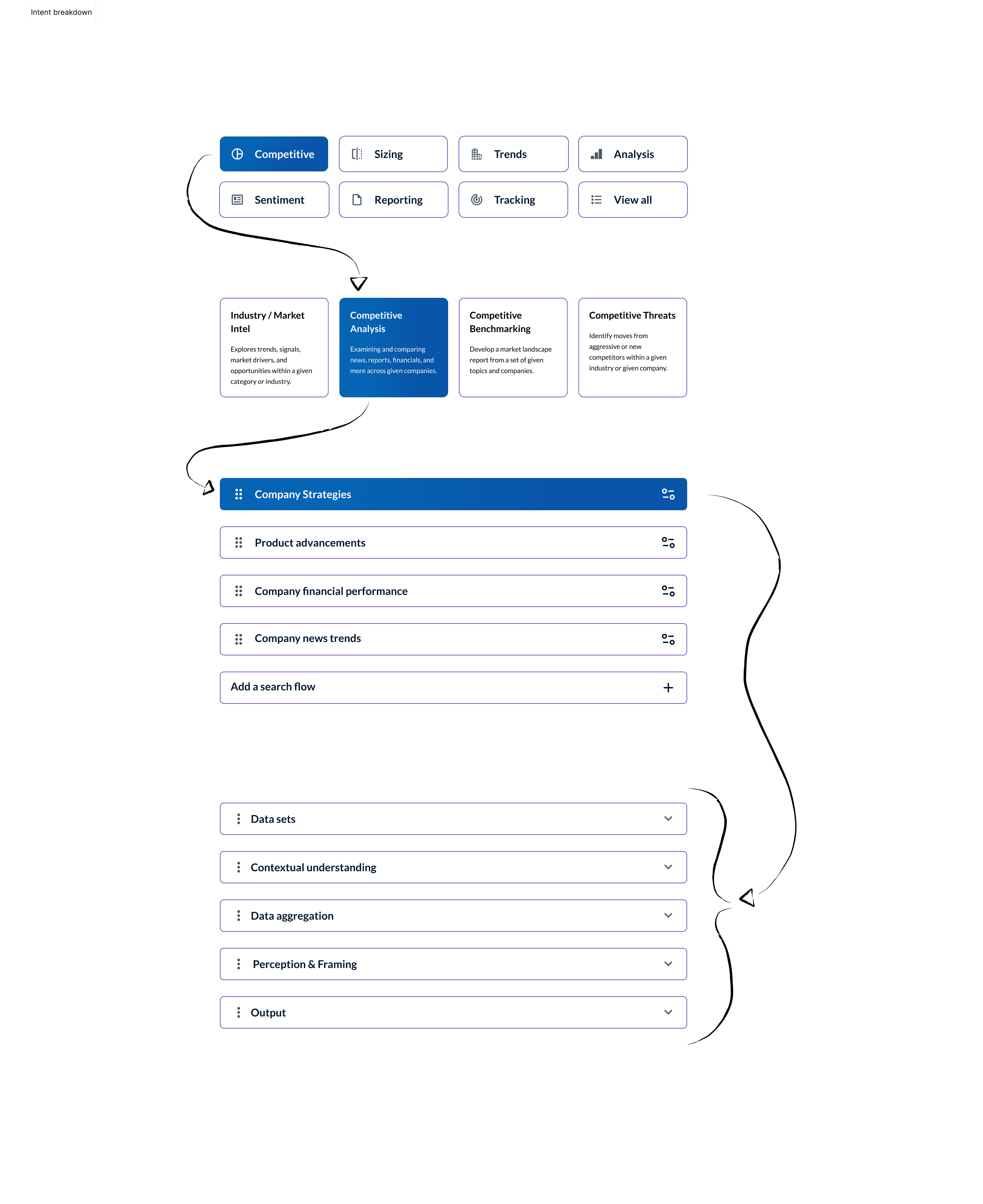
In AI-powered search, trying to be everything to everyone often results in shallow, generic outputs. For business consultants, this is especially problematic, they need precision and niche relevance, not broad overviews. The solution lies in designing around intent: clearly defining the outcomes the model should deliver to meet specific user expectations. To support this, I led research using co-design methods to uncover what consultants truly need from their searches. These insights were then translated into detailed intents, which informed the work of the data science team. The result was a more tailored, reliable search experience that aligned with user goals rather than diluting them.
In AI-powered search, trying to be everything to everyone often results in shallow, generic outputs. For business consultants, this is especially problematic, they need precision and niche relevance, not broad overviews. The solution lies in designing around intent: clearly defining the outcomes the model should deliver to meet specific user expectations. To support this, I led research using co-design methods to uncover what consultants truly need from their searches. These insights were then translated into detailed intents, which informed the work of the data science team. The result was a more tailored, reliable search experience that aligned with user goals rather than diluting them.
In AI-powered search, trying to be everything to everyone often results in shallow, generic outputs. For business consultants, this is especially problematic, they need precision and niche relevance, not broad overviews. The solution lies in designing around intent: clearly defining the outcomes the model should deliver to meet specific user expectations. To support this, I led research using co-design methods to uncover what consultants truly need from their searches. These insights were then translated into detailed intents, which informed the work of the data science team. The result was a more tailored, reliable search experience that aligned with user goals rather than diluting them.
In AI-powered search, trying to be everything to everyone often results in shallow, generic outputs. For business consultants, this is especially problematic, they need precision and niche relevance, not broad overviews. The solution lies in designing around intent: clearly defining the outcomes the model should deliver to meet specific user expectations. To support this, I led research using co-design methods to uncover what consultants truly need from their searches. These insights were then translated into detailed intents, which informed the work of the data science team. The result was a more tailored, reliable search experience that aligned with user goals rather than diluting them.
04
04
Error Handling
Error Handling
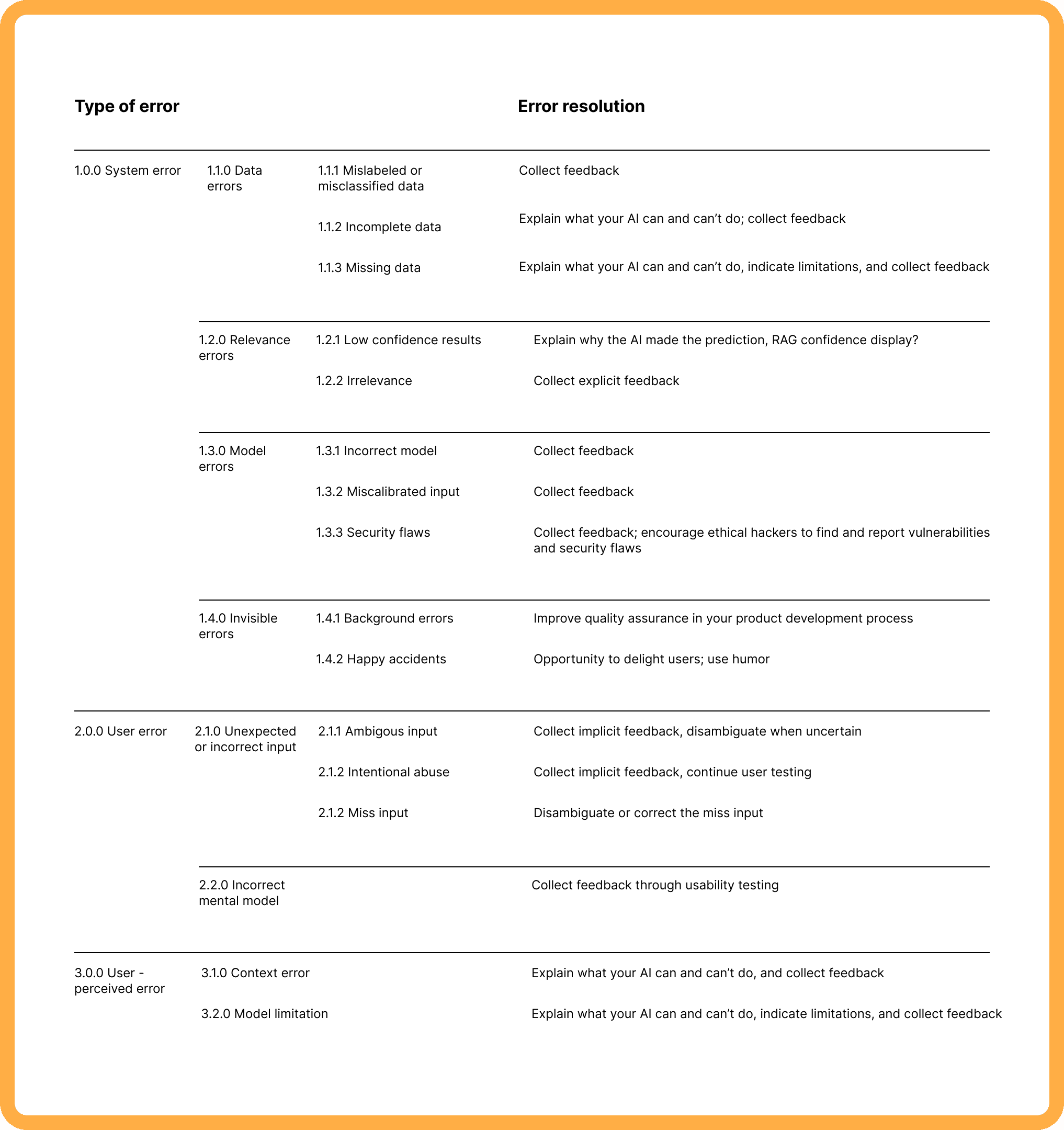
Errors are inevitable in any complex system, but how they are handled defines the user experience. Too often, errors feel abrupt or unhelpful because they don’t reflect the underlying technical limitations. To design better outcomes, I first worked closely with developers to understand exactly how the search system behaves in different failure scenarios and what data was available to us. With this knowledge, I could design error states that were not only technically feasible but also supportive to the user, providing clarity, guidance, and a path forward instead of dead ends. This approach turned technical constraints into design opportunities, ensuring that even in failure, the experience remains trustworthy and usable.
Errors are inevitable in any complex system, but how they are handled defines the user experience. Too often, errors feel abrupt or unhelpful because they don’t reflect the underlying technical limitations. To design better outcomes, I first worked closely with developers to understand exactly how the search system behaves in different failure scenarios and what data was available to us. With this knowledge, I could design error states that were not only technically feasible but also supportive to the user, providing clarity, guidance, and a path forward instead of dead ends. This approach turned technical constraints into design opportunities, ensuring that even in failure, the experience remains trustworthy and usable.
Errors are inevitable in any complex system, but how they are handled defines the user experience. Too often, errors feel abrupt or unhelpful because they don’t reflect the underlying technical limitations. To design better outcomes, I first worked closely with developers to understand exactly how the search system behaves in different failure scenarios and what data was available to us. With this knowledge, I could design error states that were not only technically feasible but also supportive to the user, providing clarity, guidance, and a path forward instead of dead ends. This approach turned technical constraints into design opportunities, ensuring that even in failure, the experience remains trustworthy and usable.
Errors are inevitable in any complex system, but how they are handled defines the user experience. Too often, errors feel abrupt or unhelpful because they don’t reflect the underlying technical limitations. To design better outcomes, I first worked closely with developers to understand exactly how the search system behaves in different failure scenarios and what data was available to us. With this knowledge, I could design error states that were not only technically feasible but also supportive to the user, providing clarity, guidance, and a path forward instead of dead ends. This approach turned technical constraints into design opportunities, ensuring that even in failure, the experience remains trustworthy and usable.
Check out my other notes
HS
HS
HS
HS